Silencing the Shake: How Precision Vibration Isolation Mounts Solve Noise and Reliability Problems in Manufacturing
Silencing the Shake: How Precision Vibration Isolation Mounts Solve Noise and Reliability Problems in Manufacturing
The Pain Point: When Vibration Becomes a Business Problem
Every rotating motor, compressor, pump, or fan produces one unavoidable byproduct: vibration. Left unmanaged, that vibration doesn't stay contained to the component that created it. It travels — through chassis panels, mounting brackets, and enclosures — and it shows up downstream as three very expensive problems:
- Noise complaints. Vibration transmitted into thin sheet-metal housings or panels acts like a speaker diaphragm, amplifying what should be a quiet hum into an audible rattle or drone. In consumer electronics, HVAC equipment, medical devices, and industrial control panels, this is often the single biggest source of end-customer complaints.
- Fatigue failure. Repeated micro-vibrations loosen fasteners, crack solder joints, and fatigue PCB traces over time. What looks like a "random" field failure six months after shipment is frequently a vibration-induced stress fracture that was never designed out.
- Sensor and precision drift. For equipment housing optical sensors, gyroscopes, or measurement instruments, even sub-millimeter vibration transmission can throw off calibration and repeatability.
For OEMs and design engineers, the challenge isn't recognizing that vibration is a problem — it's engineering a mount that isolates it without compromising structural rigidity, thermal performance, or space constraints inside an increasingly compact enclosure.
The Technical Challenge in Manufacturing Isolation Mounts
Building an effective vibration isolation mount is a materials-and-tolerance problem as much as a design problem:
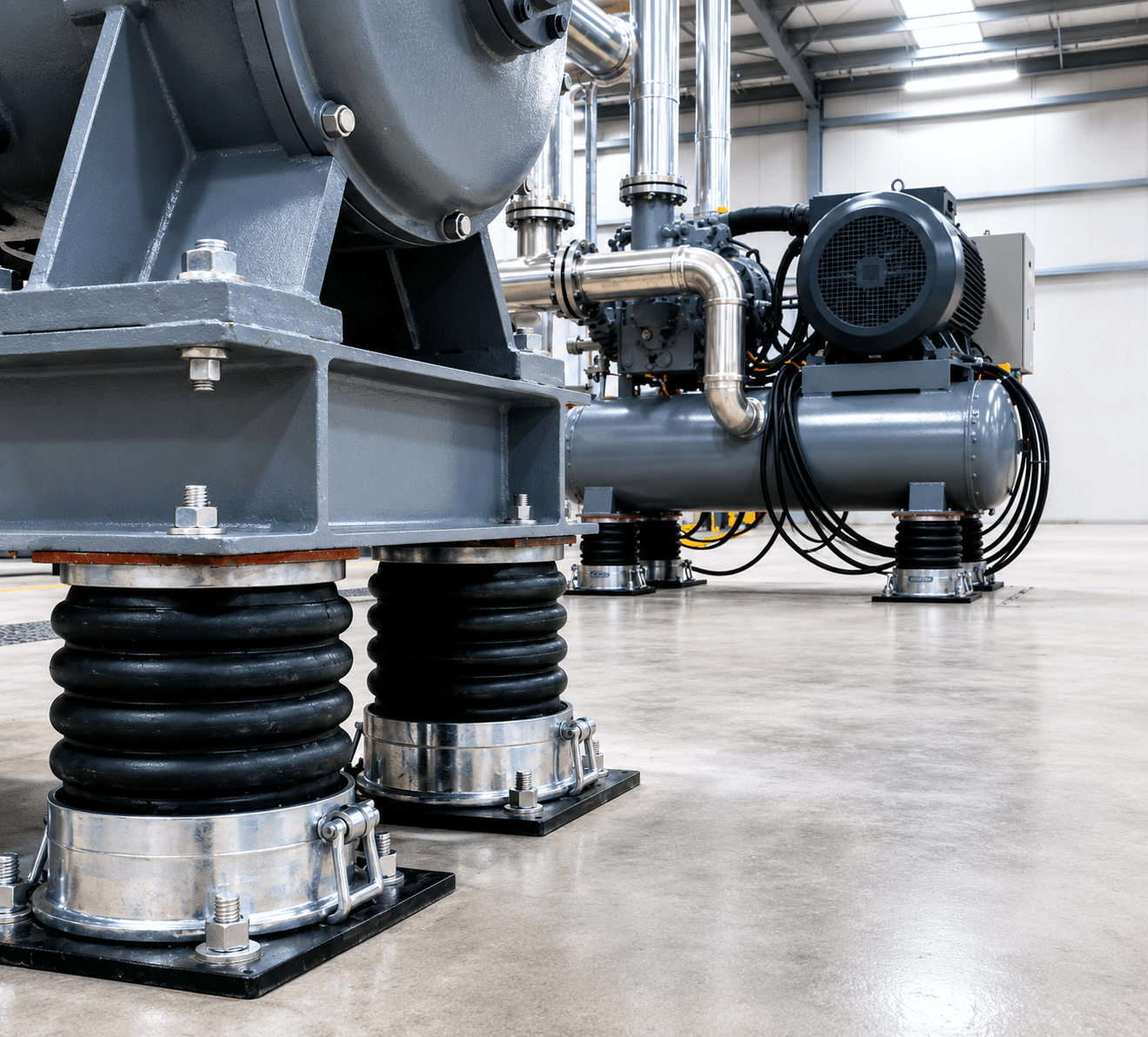
- Material selection and durometer tuning. Isolation mounts typically use elastomers (natural rubber, neoprene, silicone, or engineered polymers) chosen for a specific durometer (hardness) rating. Too soft, and the mount bottoms out under load or shifts under shock; too hard, and it fails to attenuate the target frequency range. Getting this right requires matching the mount's natural frequency to sit well below the disturbing frequency of the source component — usually a 3:1 ratio or greater for effective isolation.
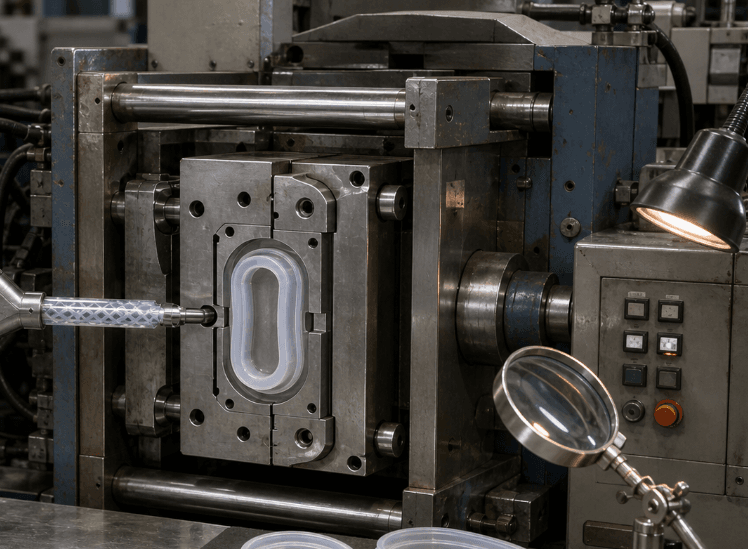
- Load-bearing consistency. In manufacturing, every mount in a production run needs to compress and rebound within tight tolerances. Inconsistent curing, mold flash, or bonding-layer voids between the elastomer and metal insert directly translate into inconsistent isolation performance across units — a serious quality risk at scale.
- Metal-to-elastomer bonding. Most mounts combine a metal insert (for structural attachment) bonded to the elastomer body. This bonding process requires surface preparation, adhesive control, and cure-cycle precision; a weak bond is the most common field-failure mode for isolation mounts, especially under thermal cycling.
- Environmental and mechanical validation. Mounts destined for industrial or outdoor equipment need validation against temperature extremes, oil/chemical exposure, UV degradation, and long-term compression set — not just initial-performance testing.
- Dimensional integration. The mount has to fit the mechanical envelope of the enclosure precisely enough to maintain electrical clearances and thermal paths, which means close coordination between mechanical design and the manufacturing process from prototype through mass production.
Getting all five of these right consistently, at volume, is where many designs stall — a mount that performs perfectly in a lab prototype often behaves differently once it's produced across thousands of units with real-world process variation.
The Silcotech Industry Solution
This is precisely where Silcotech Industry partners with OEMs. As part of Flexi Versa Group's electronics manufacturing capability, Silcotech applies EMS-grade process discipline to a component category that's often treated as an afterthought:
- Application-specific durometer and material selection, tuned to the actual disturbing frequency and load profile of the customer's equipment — not a generic off-the-shelf mount.
- Controlled bonding and curing processes that keep metal-to-elastomer adhesion consistent from first article through full production runs.
- Dimensional and load-tolerance verification built into the manufacturing line, so isolation performance doesn't drift batch to batch.
- Integration support, working directly with customer engineering teams during design-for-manufacturing (DFM) review to make sure the mount fits the mechanical, thermal, and acoustic requirements of the finished product — not just the isolation spec on its own.
The result: fewer noise-related returns, fewer vibration-induced field failures, and a mounting solution that performs the same on unit 10,000 as it did on unit one.