Silicone Rubber in SEA: How Silcotech Resolves the Material-to-Component Challenge
Published on 13th November 2026
Silicone Rubber in SEA: How Silcotech Resolves the Material-to-Component Challenge
The global liquid silicone rubber market was valued at USD 2.27 billion in 2025 and is projected to reach USD 4.23 billion by 2034, a CAGR of 6.2%, with Asia Pacific accounting for 51.54% of 2025 demand. A 2026 review in the Chinese Journal of Chemistry, An Overview of Silicone Rubber: From Properties to Industry, describes the same pull from the materials side: silicone rubber is used across automotive, aerospace, healthcare and consumer goods, and is generally classified as room temperature vulcanised (RTV), high temperature vulcanised (HTV) or liquid silicone rubber (LSR).
The manufacturing reality, however, is considerably more complicated than a material classification suggests.
A silicone component looks like the simplest part in an assembly. In practice, one part can depend on the compound's durometer, the cure profile, mould venting, the tolerance stack against a mating housing, the cleanliness of the moulding environment and, for medical use, the biocompatibility records that follow the part into the customer's audit file. Each of those carries its own qualification cycle, and a shortfall in any one of them can surface as a leak, a rejected lot or a failed audit months after shipment.
The core problem: the properties that make silicone attractive are properties of the material, while the failures OEMs experience are failures of the component. Between the two sit design decisions, tooling, process windows and cleanliness controls, usually split across several suppliers. The result is longer qualification, slower root-cause analysis and risk that sits with the OEM.
Silcotech Industry Sdn. Bhd. has supplied precision rubber components from Sungai Petani, Kedah, Malaysia since 2006, under ISO 9001 and ISO 13485 certified quality management. This article follows the path from silicone's material properties to finished industrial parts, and explains how an integrated process closes the gap for OEMs sourcing in Southeast Asia (SEA).
The Material-to-Component Problem in SEA
Choosing between RTV, HTV and LSR
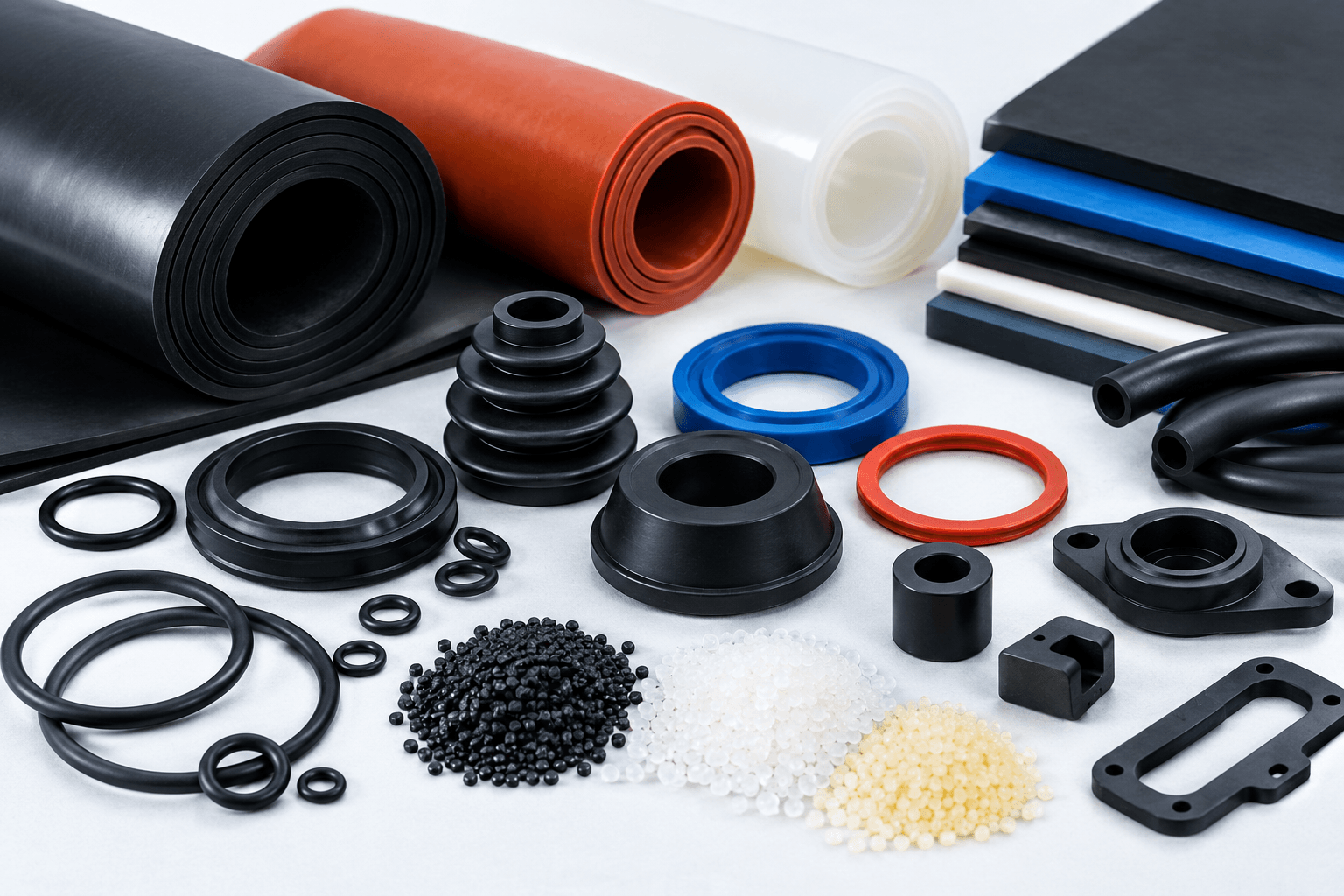
The three families are not interchangeable. RTV grades cure without a high-temperature cycle and are commonly used for sealing, potting and moulding work. HTV, or solid silicone rubber, has long, high-molecular-weight polymer chains and can be processed with conventional rubber equipment, which keeps purchase and processing cost lower. LSR is a two-part, platinum-cured elastomer processed mainly by liquid injection moulding, which suits complex geometry, fine detail and repeatable high-volume output.
The wrong choice is rarely visible on a datasheet. It shows up later as a part that cannot be moulded to its drawing, a cure that leaves residues unsuitable for a clean application, or a unit cost that never reaches target. Material selection is therefore a manufacturing decision as much as a chemistry decision, and it belongs at the start of the programme rather than after the tool is cut.
The same material, five different specifications
Silicone's temperature range, resistance to ageing and chemical stability explain why it appears across so many sectors. Each sector, though, asks something different of the finished part.
| Industry | What the part must do | Consequence if the specification slips |
|---|---|---|
| Medical | Biocompatibility, low outgassing, cleanliness, traceable documentation | Failed audit, delayed registration, recall exposure |
| Electronics | Seal housings and connectors, protect against ESD, hold tolerance against mating parts | Ingress failures, ESD damage, assembly rework |
| Automotive | Survive heat, fluids and vibration over long service life | Seal degradation, warranty claims |
| Consumer | Repeatable feel, colour and finish on skin-contact or handled parts | Cosmetic rejects, inconsistent user experience |
| Utility | Resist weathering and outdoor ageing | Premature seal failure, field maintenance cost |
The table shows that "silicone" is a starting point, not a specification. The same base polymer must be formulated, moulded and validated differently for a catheter tip than for a connector seal, and a supplier that treats both identically is carrying hidden risk on the OEM's behalf.
Tolerance and cleanliness are set in the process, not on the drawing
A drawing can call for tolerances of 0.08 mm to 0.15 mm, but whether a production run holds them depends on mould design, venting, cure control and inspection. The same applies to cleanliness. A medical part moulded in an uncontrolled environment cannot be made compliant afterwards by inspection alone.
The risk is structural: it is created in the process and cannot be inspected out at the end.
Why Malaysia Is the Right Manufacturing Base for Silicone Components
Malaysia's medical device industry has built a substantial export base. Medical device exports rose 31% to RM37 billion in 2024, according to remarks at the pre-launch of IMDEC 2026, and the sector drew RM20 billion in domestic and foreign investment between 2021 and 2024. For silicone component buyers, that ecosystem matters because medical, electronics and industrial customers increasingly expect the same documented process discipline.
Structural Advantages
- An established medical and electronics customer base. Silicone components for catheters, wearables, housings and connectors are supplied into industries already clustered in the region.
- Documented quality systems. ISO 13485 certification is held by only a few rubber manufacturers in Malaysia, which gives OEMs a recognised basis for supplier qualification.
- Proximity to regional manufacturing. Silcotech supplies customers across Southeast Asia, Europe, Asia and the USA from a single production base of about 60,000 sq ft.
- Engineering depth in one location. R&D, tooling design and material formulation sit with production, which shortens the loop between a design change and a moulded sample.
Key insight: For silicone, location matters less than whether design, tooling, moulding and compliance sit close enough together to be fixed in days rather than quarters.
How Silcotech Supports Silicone Component Manufacturing
Integration is an engineering requirement for silicone because the decisions interact. Durometer, mould design, cure profile and housing tolerance cannot be optimised separately without trading one problem for another. Silcotech runs these steps under one roof, from tooling and prototyping through to production.
End-to-End Manufacturing for Silicone Parts
The table below shows where each stage sits and what it gives the OEM.
| Process stage | Silcotech capability | What it means for the OEM |
|---|---|---|
| Design for manufacture | DFM and tool technology evaluation, including mould-filling simulation | Filling and venting issues found before tooling spend |
| Prototyping | Quick turn soft tooling and samples | Early fit and function checks on real parts |
| Tooling | In-house tooling design | One team responsible for mould and part |
| Moulding | LSR injection, dual extrusion and compression moulding, tolerances from 0.08 mm to 0.15 mm | Complex, tight-tolerance parts from one process route |
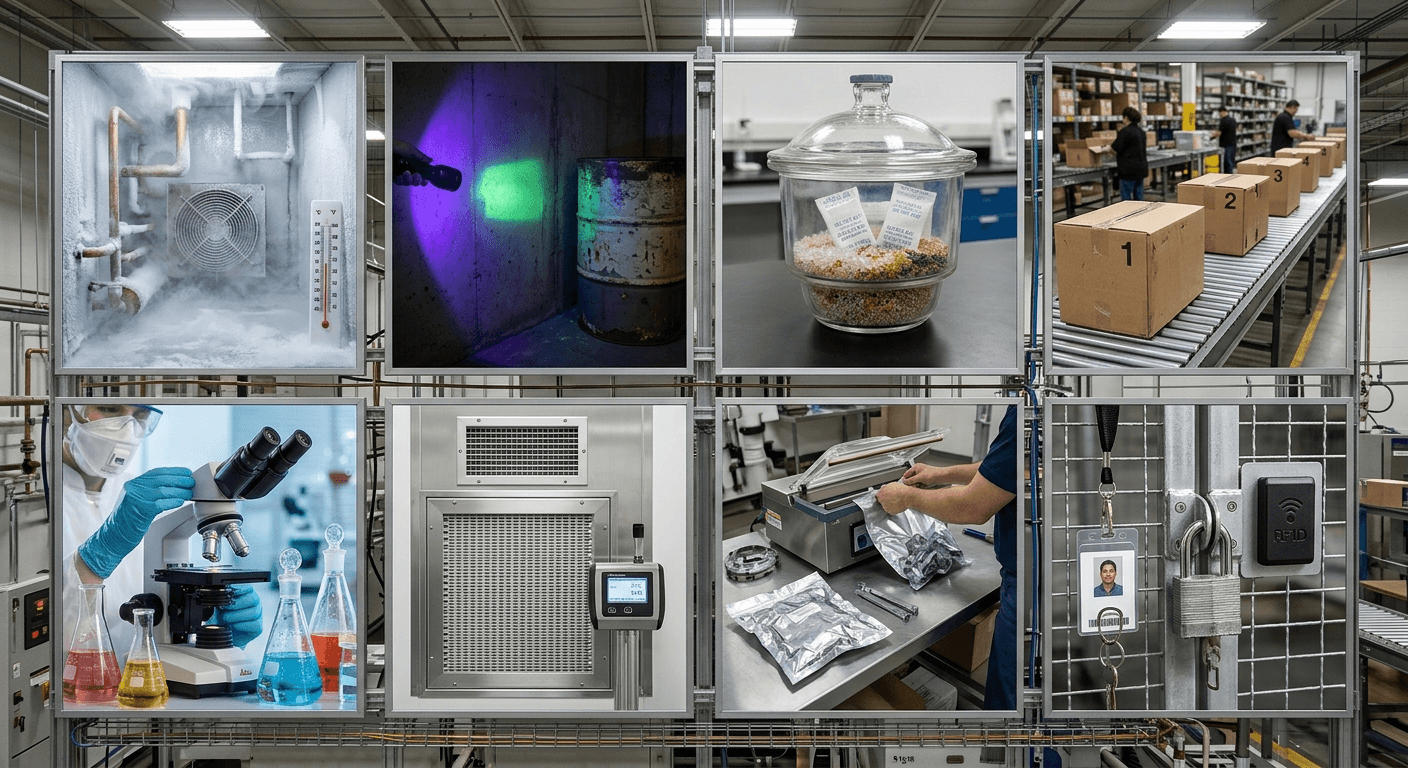
| Clean production | Class 8 and Class 9 cleanrooms with controlled personnel protocols | Medical and low-outgassing parts made in the right environment |
| Compliance | Compliance testing and certification support | Documentation aligned with the part, not assembled afterwards |
Most silicone failures do not come from one bad step. They come from handoffs: a tool built to a drawing the moulder never reviewed, a compound changed without revisiting the cure window, a cleanliness requirement discovered after the mould is approved. Keeping these stages together shortens root-cause work, because the engineer who can see the mould, the process data and the material record is in one team.
Silcotech states that its integrated process delivers 15% to 30% faster cycle times, 15% to 30% less material waste and 15% to 20% fewer defects. These are the company's own claims and are presented as ranges, not guarantees.
Handling the High-Mix, Custom Reality
Silicone programmes are rarely standard catalogue parts. Custom and regulated work typically involves:
- Low to high volume flexibility. Prototype quantities, pilot runs and full production move through the same process route.
- Bespoke parts. Fully custom rubber components are designed, prototyped and manufactured to the OEM's application.
- Material evaluation. Candidate compounds are assessed against the application, with material options documented for engineers.
- Special applications. Ad hoc and unusual demands are handled by an in-house tooling and R&D team.
How Silcotech Resolves Specification Risk for OEMs in SEA
Resilience in silicone supply is designed in before problems appear. The mechanisms below act early, when a change costs a design review rather than a tool rebuild.
Material qualification against the application
Silcotech evaluates candidate materials against how the part will actually be used. In the wearable IoT vest programme, 15 materials were sourced and evaluated, and one was selected on flexibility, durability and weather resistance before electronics were embedded in silicone. The same principle applies to seals, keypads and medical components: the material is chosen against the application, not the catalogue.
Mould-filling simulation before tooling
Mould-filling simulation exposes air traps, weld lines and venting problems on screen. Correcting them at the design stage is far cheaper than correcting them in hardened steel, and it protects the tolerance window the OEM specified.
Validated process windows
Once a mould is approved, the cure and moulding parameters that hold tolerance are fixed and controlled. This gives the OEM a part that behaves the same in the tenth lot as in the first, which matters most for regulated work where a change in process can trigger re-qualification.
Operational reality: The cheapest silicone programme is rarely the one with the lowest part price. It is the one that reaches stable yield without a second round of tooling.
Applications Silcotech Supports
Medical
Medical parts demand clean production and documented biocompatibility. Silcotech's medical graded rubber products are made in Class 8 and Class 9 cleanrooms for the medical industry.
- Catheter tips and seals for fluid control and diagnostic devices
- Housings and grommets
- Implantable components requiring biocompatibility
- A catheter-deployable cardiac occluder with a 0.08 mm ±10% silicone film overmoulded on nitinol mesh
- A reusable silicone wound care patch, registered with the Malaysia Medical Device Authority
Electronics
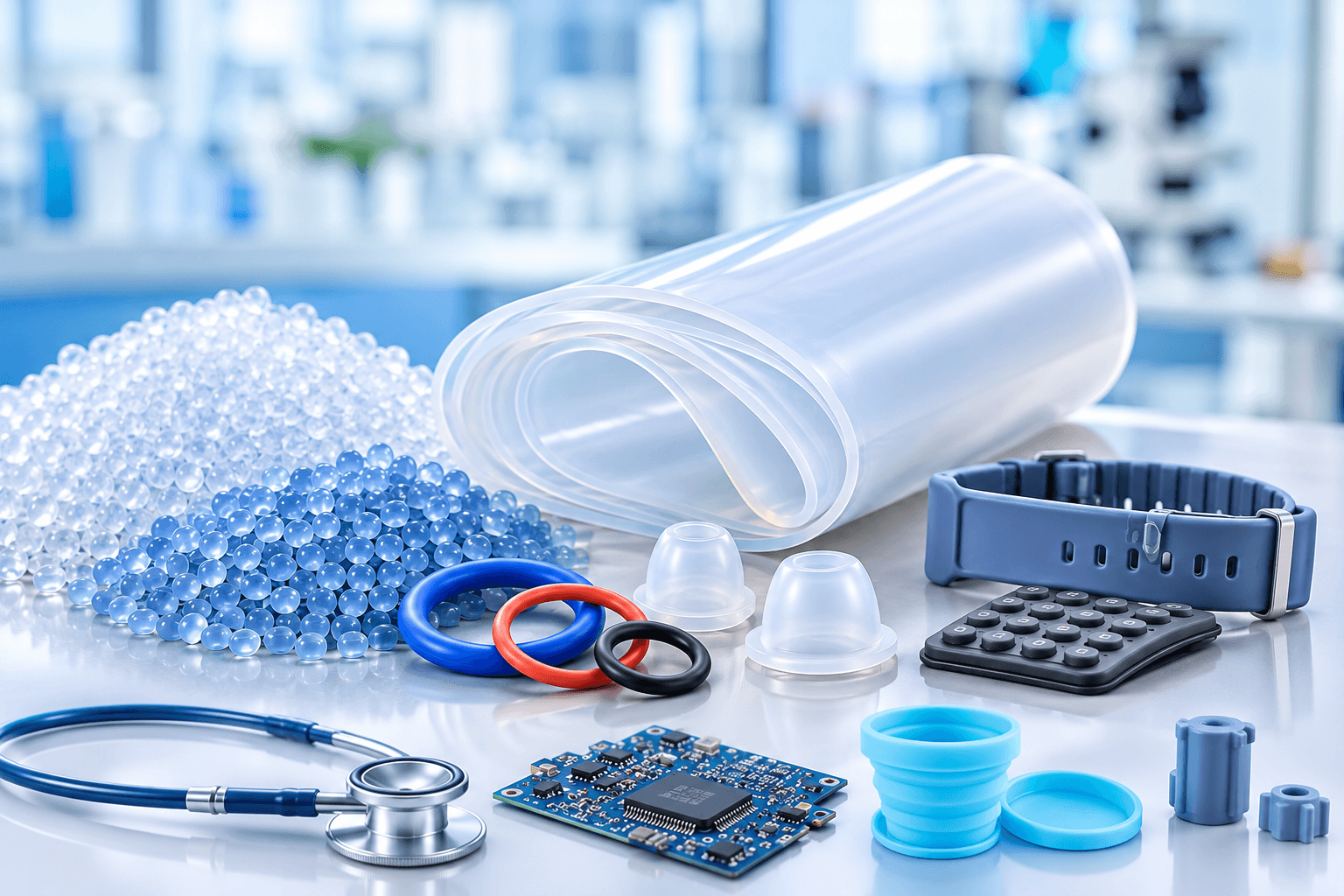
Electronics work centres on sealing, tolerance and ESD control. Connector seals, switch interfaces and housings all depend on a part that stays dimensionally stable and keeps its sealing force through the product's service life.
- Seals and gaskets for connectors, switches and housings
- Keypads and button interfaces for control panels
- Antistatic and conductive rubber components for ESD protection
- Overmoulded elastomer switch buttons for wearable monitoring devices
- Potting and embedding of electronics, as in the wearable IoT vest
Automotive, Consumer and Utility
These sectors share a need for long service life and repeatable output across high volumes.
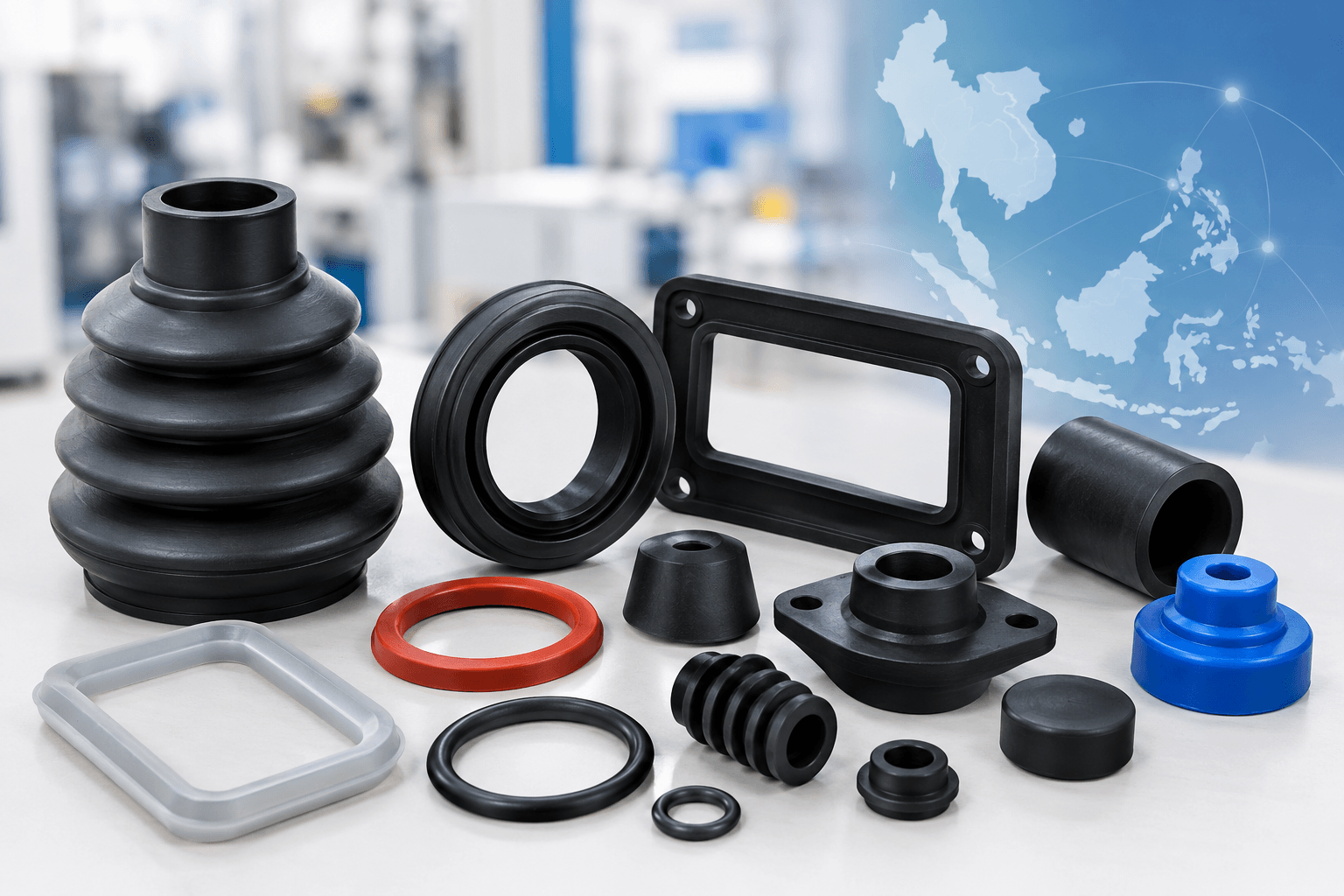
- General and customised moulded rubber parts for automotive applications
- Rubber feet and food graded rubber products for consumer use
- Seals and mounts for utility equipment exposed to outdoor conditions
For a closer look at the material parameters behind these parts, see the related Insights article on LSR silicone rubber specifications.
The Integration Advantage for Quality and Speed
A fragmented silicone supply chain multiplies the number of places a specification can be misread. An integrated one reduces those places to a single team's workload. The table compares the two.
| Risk in a fragmented model | Silcotech's integrated approach | Result for the OEM |
|---|---|---|
| Tool built without material or cure input | DFM and mould simulation with materials knowledge | Fewer tool modifications |
| Cleanliness discovered late | Cleanroom requirement set at design review | No surprise requalification |
| Tolerance stack unchecked against mating parts | Part and mould reviewed together | Fit achieved at first assembly |
| Compliance records assembled after the fact | Testing and certification planned with the programme | Cleaner audit file |
| Slow root-cause across vendors | One team with process and material data | Faster corrective action |
The practical effect is shorter new product introduction cycles, fewer re-spins and faster yield stability. For OEMs, each of those turns directly into time to market. It also simplifies supplier management: one accountable engineering contact replaces a chain of purchase orders, drawing revisions and disputed responsibility between a tool shop, a moulder and a testing house. When a lot is questioned, the material record, process data and inspection results are already in the same place.
Partnering with Silcotech for Silicone Components in SEA
Demand for silicone components is growing, and the sectors driving it are the ones with the least tolerance for specification error. The challenge is structural: the material is well understood, but turning it into a reliable, documented, repeatable component takes coordinated engineering across design, tooling, moulding and compliance.
- Integrated engineering. Design, tooling, moulding and testing in one organisation.
- Precision moulding. LSR injection, dual extrusion and compression moulding to tolerances from 0.08 mm to 0.15 mm.
- Cleanroom capability. Class 8 and Class 9 production for medical and low-outgassing parts.
- Quality systems. ISO 9001 and ISO 13485 certification, with medical grade products described as compliant with FDA, USP and ISO standards.
- Experience. More than 20 years of precision rubber supply and over 2,000 projects delivered.
The question is not whether silicone can meet the requirement. It is whether the risk of turning the material into a qualified component is carried by the OEM alone, or shared with a manufacturer built to absorb it.
To discuss a silicone programme, contact Silcotech or explore the precision LSR injection capability.